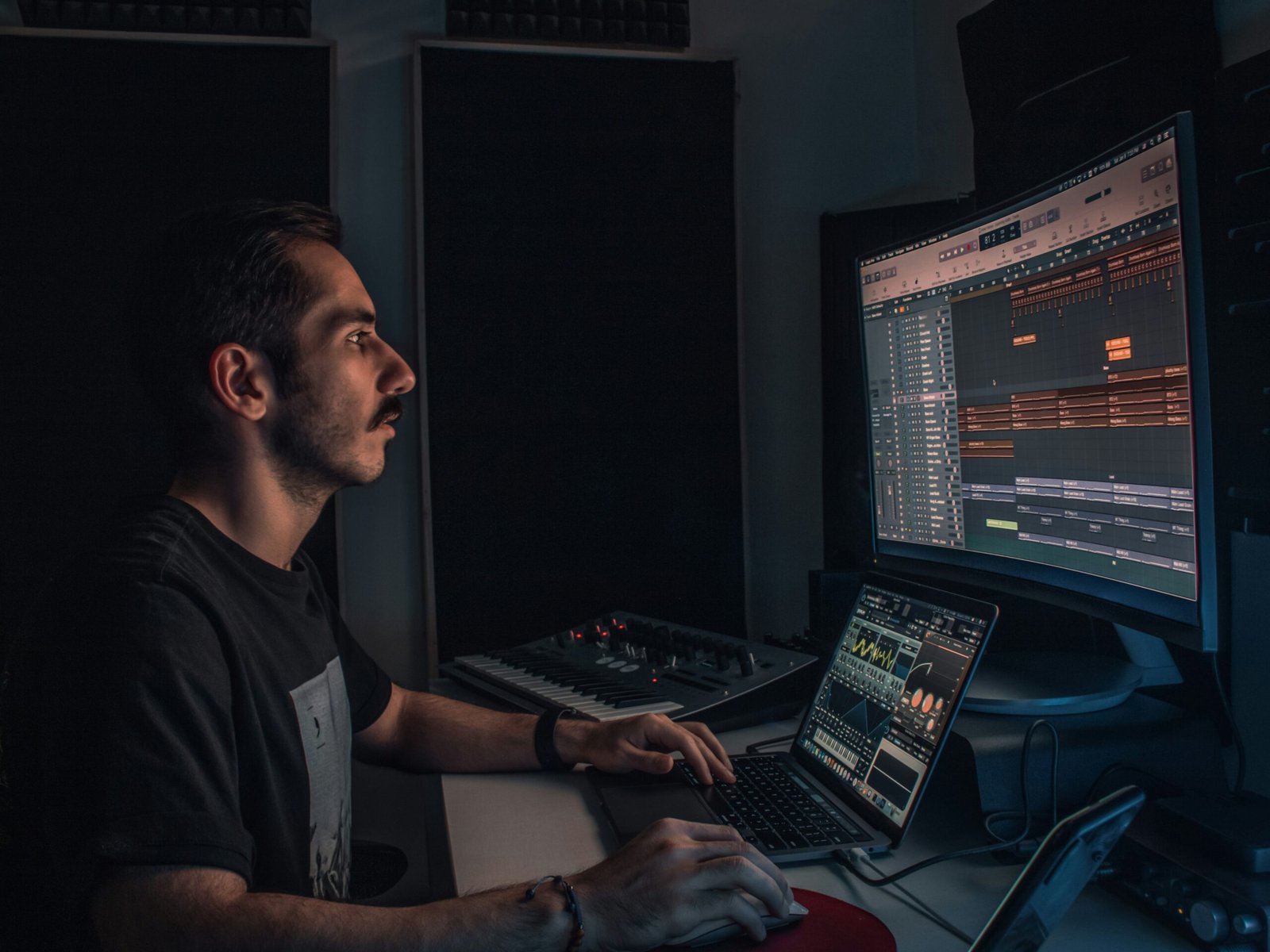
Picture sitting at your desk, staring at a blank document while trying to brainstorm ideas for a marketing campaign. You type a quick sentence into a chat box: “Give me five catchy slogans for a coffee brand that caters to night shift workers.” Within two seconds, a list pops up, complete with witty puns and punchy taglines.
Or imagine typing “A cozy cabin in the woods during a snowy autumn evening, painted in the style of Van Gogh,” and watching a computer generate a stunning digital painting from scratch in real-time.
That is not a human artist working overtime behind a screen. That is Generative AI at work.
A few years ago, computers were great at analyzing data, sorting spreadsheets, and playing chess. But they were terrible at creating anything original. Today, they write code, compose music, generate realistic photographs, and chat with us like old friends.
Let’s pull back the curtain and look at what generative AI actually is and how it pulls off these incredible tricks, minus the confusing tech jargon.
What is Generative AI?
To understand generative AI, it helps to look at the difference between traditional AI and this newer breed of technology.
Traditional AI is analytical. If you show it a thousand photos of cars, an analytical AI can look at picture number 1001 and tell you, “Yes, that is a car.” It classifies, sorts, and predicts based on rules.
Generative AI takes things a massive step further. Instead of just analyzing or sorting existing data, it creates brand-new content. It does not copy and paste pieces from the internet; it synthesizes patterns it has learned and invents something fresh every single time you give it a prompt.
If you ask it to write a poem about a rainy Tuesday in Chicago, it does not search Google for an existing poem. It writes a completely original piece of writing word by word, predicting what comes next based on the billions of examples it studied during training.
A Peek Under the Hood: How Does It Actually Work?
You do not need a degree in computer science or advanced mathematics to understand the basics of how these systems function. It all comes down to patterns, probability, and massive amounts of data.
1. The Training Phase: Reading the Library of Alexandria
Before a generative AI tool can write a single sentence or draw a single picture, it has to go to school. And that school involves reading practically everything humans have ever published online.
Developers feed these systems oceans of data—books, websites, research papers, billions of images, audio files, and lines of source code. The AI absorbs this data, not by memorizing it word-for-word like a textbook, but by studying the relationships between words, colors, notes, and pixels.
It learns that the word “peanut butter” is frequently followed by the word “jelly,” or that a blue sky in a landscape photo usually sits above green grass.
2. The Power of Prediction
At its absolute core, generative AI is a high-stakes guessing game.
When you type a prompt into an AI text generator, the system looks at your words and calculates the statistical probability of what word should come next. Then, once that word appears, it recalculates the probability for the next word, and the next, until the paragraph is complete. It moves so fast that it feels like you are reading a continuous thought stream from a human mind.
3. Neural Networks and Patterns
Most modern generative AI relies on an architecture called Neural Networks—specifically models inspired by how human brain cells connect and communicate. These networks pass information through multiple digital layers, allowing the computer to recognize complex context.
For example, a lower layer of a vision AI might spot simple lines and curves. The middle layer puts those curves together to recognize shapes like eyes or wheels. The top layer understands that those shapes form a dog riding a skateboard.
The Different Faces of Generative AI
Generative AI is not a one-trick pony. Depending on what kind of input you give it, it can spin up completely different types of media:
- Text Generators: Tools like ChatGPT or Claude take written prompts and write essays, draft emails, summarize long reports, or brainstorm business ideas.
- Image Generators: Tools like Midjourney or DALL-E take descriptive text prompts and turn them into hyper-realistic photos, vector graphics, oil paintings, or 3D renders.
- Audio and Voice AI: Modern speech models can clone a human voice with just a few seconds of audio samples, translate spoken languages into different dialects instantly, or compose original background music tracks for videos.
- Video and Code Generators: Programmers now use AI coding assistants to write complex software code in seconds, while video generators can create realistic short clips from a simple sentence.
Where Do We Use It Every Day?
You might think generative AI is only used by tech researchers, but it has quietly woven its way into everyday software tools:
- Email Autocomplete: When Gmail suggests the rest of your sentence while you type an email, that is a lightweight form of generative text predicting your thoughts.
- Customer Support Chatbots: Modern support bots don’t just give robotic, pre-written answers anymore. They understand complex, messy human questions and generate natural, helpful replies on the fly.
- Design and Editing Apps: Programs like Photoshop use generative fill tools to let designers expand backgrounds, remove unwanted objects, or add new elements to photos with a single click.
The Growing Pains and Ethical Questions
As thrilling as it is to watch a computer paint a masterpiece or write a computer program in seconds, generative AI brings some heavy baggage along for the ride.
- Copyright and Ownership: Because AI models are trained on billions of public works—often without direct permission or compensation—artists, writers, and photographers are pushing back hard against tech companies over intellectual property rights.
- Hallucinations: AI does not “know” facts; it predicts plausible-sounding text. Sometimes, it makes things up with absolute confidence. If you ask an AI for historical facts, it might invent a completely fake event while sounding entirely convincing.
- The Authenticity Crisis: When anyone can generate hyper-realistic fake photos, voice clones, or fabricated videos, telling the difference between real life and digital fabrication becomes an uphill battle for society.
Where Are We Headed?
Generative AI is no longer a futuristic sci-fi experiment. It is a fundamental shift in how humans interact with technology.
We are moving away from the era of clicking menus, writing rigid code, and digging through endless search engine results. The future interface with technology is conversational. You simply tell your computer what you want in plain English, and generative AI builds the first draft for you.
The magic of these tools is not that they replace human imagination, but that they act as a creative springboard. They wipe out the blank page panic, handle the heavy lifting, and give us more room to focus on big ideas, strategy, and human connection.