Think about how you managed your day-to-day life five years ago compared to how you do it right now. Tasks that used to take hours—like hunting for flight deals across a dozen browser tabs, drafting formal work emails, or translating documents—are now handled in seconds by simple text prompts.
Now, fast forward. What will our world look like when we hit 2030?
We are not talking about a distant, flying-car science fiction utopia. We are looking at a horizon just a few short years away. The rapid growth of artificial intelligence means the next decade will reshape our routines, our jobs, and our relationship with technology in ways we are only beginning to understand.
Let’s break down what is actually changing, how our daily habits will shift, and what 2030 looks like without the over-the-top tech hype
1. The End of the Standalone App Era
Right now, managing a simple project or planning a weekend trip feels like digital gymnastics. You open one app to check your calendar, another to look at hotel prices, a third to message your friends, and a fourth to map out restaurants. You spend half your time copying and pasting data between isolated programs.
By 2030, that clunky app-hopping model is set to fade away.
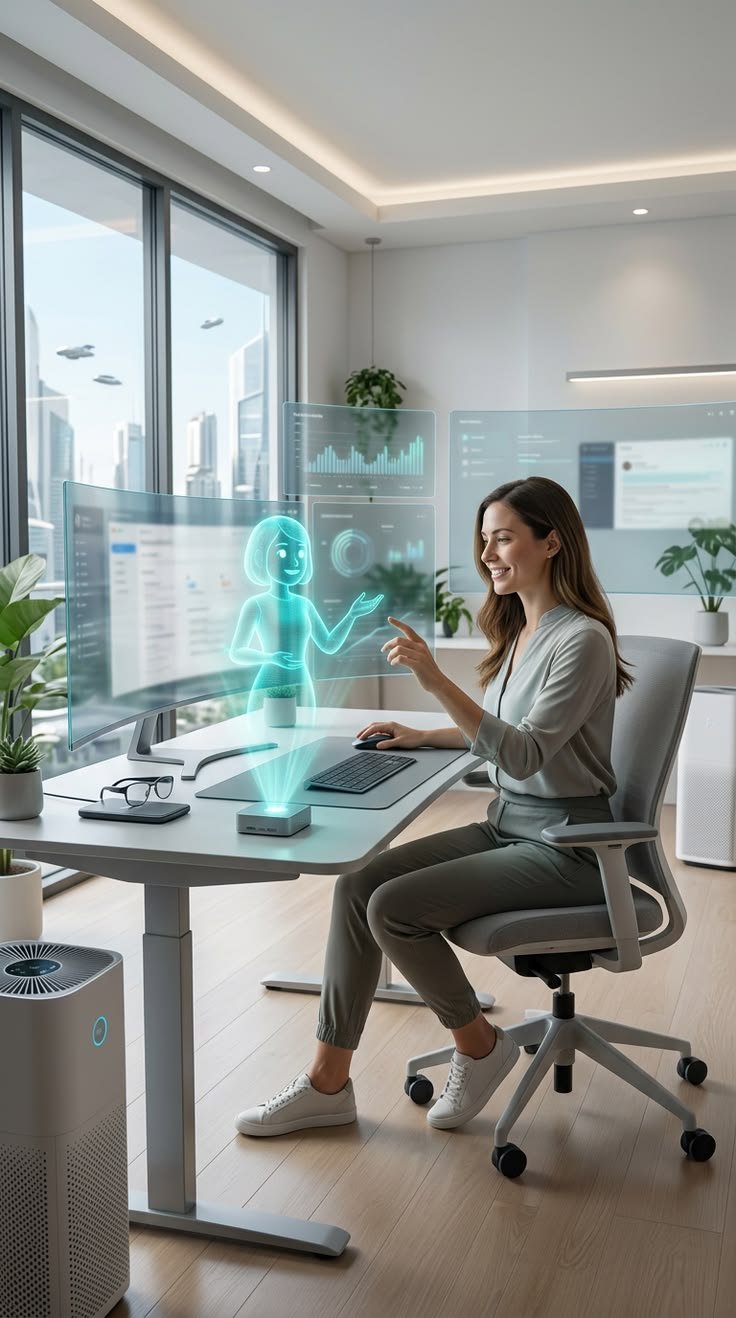
Instead of juggling twenty different icons on your phone screen, you will interact with goal-based AI agents. You state your intent in plain language, and the system handles the heavy lifting behind the scenes.
Imagine telling your device: “Plan a three-day weekend in Chicago for two people under an eight-hundred-dollar budget, make sure the hotel is near a subway station, and book us direct morning flights.”
Your personal AI agent will coordinate directly with airline APIs, hotel databases, calendar schedulers, and payment methods, handing you a single, finalized itinerary with receipts. You keep the services you love, but an intelligent orchestration layer runs them faster than you can click.
2. Every Professional Gets a Digital Chief of Staff
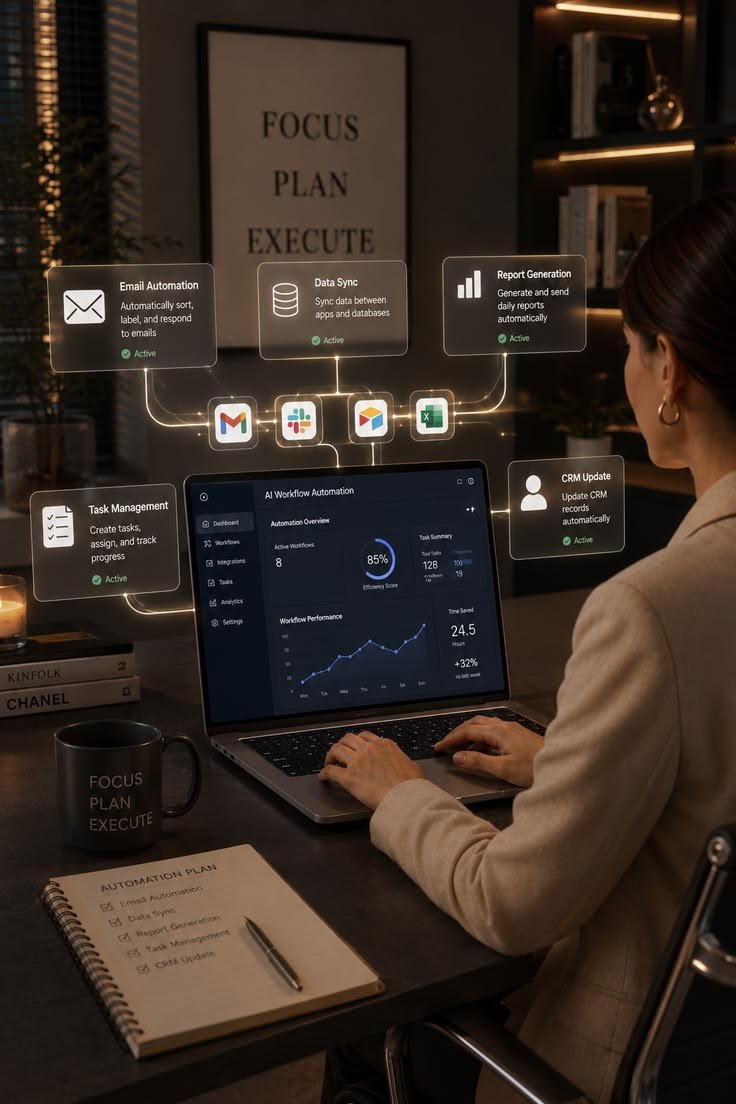
We are currently living in the era of basic AI “copilots”—tools that help you write a paragraph or autocomplete a line of code. By 2030, those copilots will evolve into fully fledged chiefs of staff.
Picture walking into your workspace on a Monday morning. Your AI chief of staff has already spent the weekend running maintenance on your professional life:
- It scanned hundreds of incoming emails, flagged the three that genuinely require your attention, and archived the noise.
- It prepped briefing notes and meeting agendas based on last week’s project files.
- It drafted four routine follow-up replies written precisely in your personal communication voice, waiting for your quick review and approval.
Instead of spending the first two hours of your day drowning in administrative clutter, you step straight into high-level decision-making. Gartner projections suggest that by 2030, nearly all information technology and knowledge work will be heavily augmented or reshaped by automated systems, shifting humans away from repetitive chores and toward creative strategy.
3. Hyper-Personalized Education and Healthcare
The traditional “one-size-fits-all” model of schooling and medicine is due for a massive overhaul. Right now, classrooms teach to the middle, and medical treatments often rely on broad, generalized averages.
By 2030, personalization will become ambient and continuous:
- Education: Students will learn alongside adaptive AI tutors that map directly to how their individual brains process information. If a teenager struggles to grasp chemistry concepts, the AI pauses, shifts to visual diagrams, and uses analogies related to the student’s favorite hobbies.
- Healthcare: Doctors will rely on predictive AI models that continuously monitor wearable health data, flagging early signs of cellular changes or heart irregularities months before physical symptoms ever manifest. Treatment plans will be tailor-made for your unique genetic makeup.
4. The Physical World Meets Smart Automation
AI is stepping out of the computer screen and stepping directly into the physical environment.
Streets will feature higher densities of autonomous delivery vehicles and smart traffic grids designed to eliminate congestion entirely. In agriculture, AI-driven sensors and autonomous tractors will monitor soil moisture, target pests with pinpoint accuracy, and reduce water waste across global food supply chains.
In manufacturing, automated systems will handle dangerous factory floor work and precision assembly, while human supervisors manage quality control, system maintenance, and creative redesigns.
The Speed Bumps on the Road to 2030
Of course, a smooth road to the future is never guaranteed. As we race toward 2030, society must navigate serious hurdles:
- Energy and Infrastructure: Powering massive data centers requires staggering amounts of electricity. Finding green, sustainable energy sources to run the next generation of AI models without harming power grids is a major challenge engineers are racing to solve.
- The Trust Deficit: With deepfakes and synthetic media getting harder to spot, the line between truth and digital fabrication will blur. Society will need robust cryptographic tools and clear regulations to verify what is real.
- Skills Atrophy: When machines do the heavy lifting of remembering, translating, and calculating, humans risk losing touch with core cognitive skills. Keeping our own critical thinking sharp while using smart tools will be a vital personal responsibility.
Looking Ahead
The story of artificial intelligence in 2030 is not about machines locking humans out of the picture. It is about capability expansion.
Just as the internet transformed how we communicate and smartphones changed how we navigate cities, AI by 2030 will dissolve the friction of daily digital chores. It will free us up to focus on what humans have always done best: asking big questions, showing empathy, and inventing things that have never existed before.